The Transformers
Five Educators helping students discover who they are and who they can become
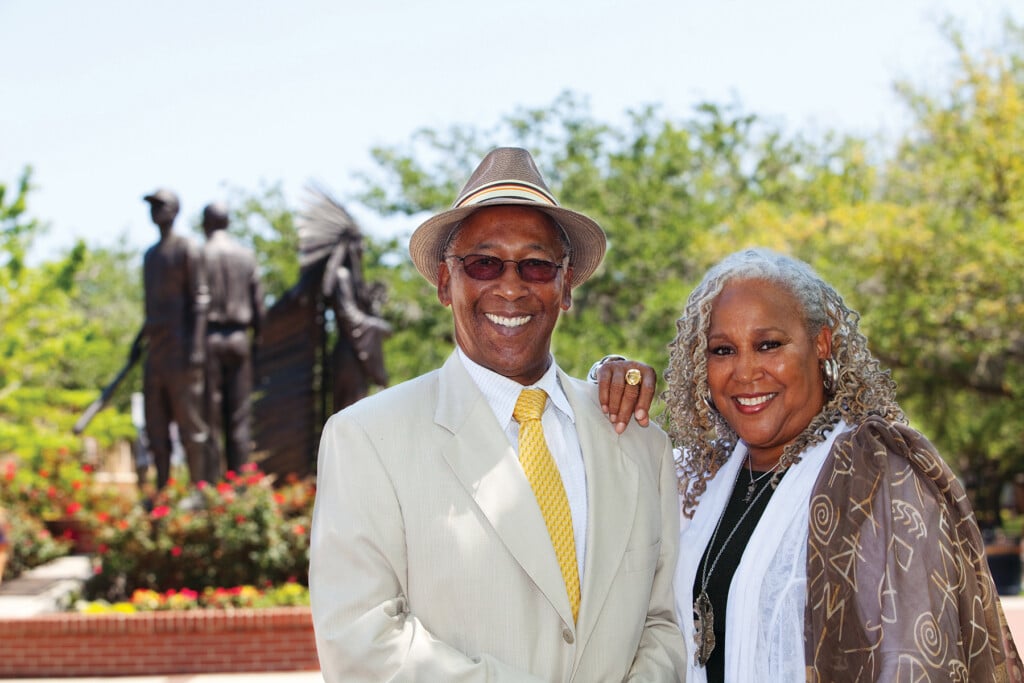
Education is typically measured in grades and degrees. But in Tallahassee, learning unfolds in many places—summer camps, middle school classrooms, college lecture halls, and creative studios—guided by educators who shape lives at every stage. In this city of universities and cultural institutions, teaching extends far beyond the curriculum. Great educators build confidence, nurture belonging, and open doors to new possibilities.
The unifying thread is that education here is not transactional—it is transformational. These teachers are not simply delivering lessons. They cultivate resilience, curiosity, creativity, leadership, and self-belief. Across Tallahassee, five educators represent that rich spectrum of educational gains.

Photo by Erich Martin
SHANNON B. SMITH
Preparing Healing Leaders
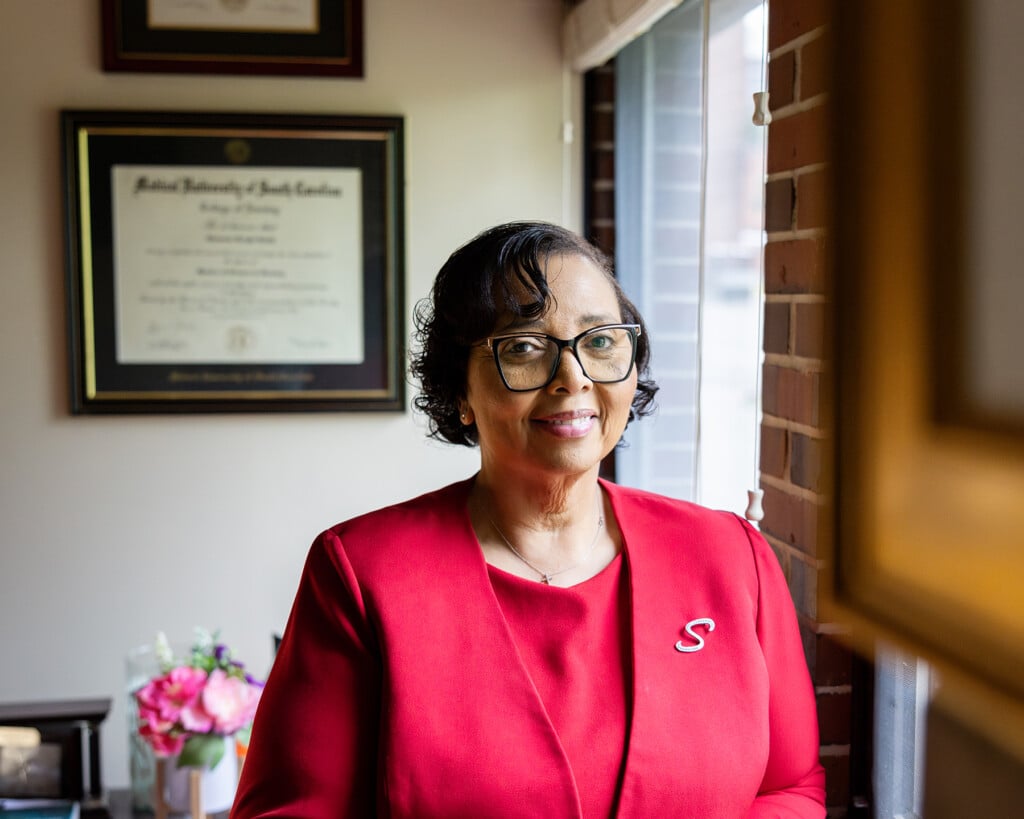
At Florida A&M University (FAMU), Dr. Shannon B. Smith is shaping the next generation of nurses and leaders.
Smith, dean of the FAMU School of Nursing, leads one of the nation’s most historically significant nursing programs. The school, celebrating its ninetieth anniversary, is the oldest continuing baccalaureate nursing program at a historically Black university.
Her path to nursing began with a life-changing experience.
Nursing was Smith’s second career. Her first degree was in accounting, and she once expected to spend her life working with numbers. But in 1989, she was diagnosed with ovarian cancer and underwent nearly a year of chemotherapy. The care she received from nurses transformed her perspective.
“I have never forgotten how I was cared for by the nurses,” she shares.
That experience inspired her to dedicate her life to nursing, eventually leading her into clinical practice and education. Her passion for teaching emerged while supervising nursing students during hospital rotations.
“When they had questions and you saw the lightbulb moment, it was incredibly rewarding,” this soft-spoken professor says.
Today, Smith continues teaching undergraduate leadership courses while guiding the School of Nursing. For this dean, nursing education must cultivate both skill and compassion.
“That main quality is caring,” she says. “You have to care enough to go above and beyond what might be expected of you.”

Photo by Erich Martin
Kenneth Horne
Helping Students Discover Identity
Kenneth Horne sees transformation every day in his civics classroom.
He teaches at William J. Montford III Middle School, where students are navigating one of the most formative stages of life. Born in Corpus Christi, Texas and raised largely in Florida, he came to Tallahassee to attend Florida State University and ultimately made the city his own.
Over his 35 years as an educator, Horne, 55, has developed a reputation for bringing history to life through storytelling, artifacts, and hands-on learning. Since joining Montford Middle School in 2013, his approach has earned him recognition as the 2025–2026 Leon County Schools Teacher of the Year.
Before entering the classroom, this educator worked in museums and historic sites across the region—experiences that shaped the teaching style that defines his classroom today.
“I’ve always loved demonstrations—letting students try something rather than just hearing about it,” he says. “That tends to strike a spark.”
In civics lessons, Horne incorporates artifacts students can hold and examine. When studying the American Revolution, for ex- ample, he passes around items once taxed by the British and brings in reproduction uniforms for students to try on.
Another part of his work happens beyond the curriculum. Over the years, he has created clubs—from guitar to model trains—for students who may not feel they fit neatly into traditional activities. Those spaces help students find connection and confidence.
“I try to show them how civics connects to their own lives,” he says. “Once they see that connection, they start paying attention.”
For Horne, teaching civics is about helping students understand their place in the world and their ability to shape it.

Photo by Erich Martin
Iris Pendleton
Building Belonging at the Beginning
For Dr. Iris Pendleton, education be- gins with belonging.
Pendleton, 43, founder of Camp Summer Garden and an instructor at Tallahassee State College, has spent more than 17 years in early childhood education. Her work centers on children with autism and their families, creating environments where every child feels seen, supported, and capable.
The idea for Camp Summer Garden emerged from personal experience. Pendleton saw firsthand how difficult it was for her niece, Haley, who has autism, to find programs designed for children like her.
“I watched the struggles that her mom had just trying to find care for her, just trying to find inclusive environments,” she shares.
During doctoral studies at Florida State University, this educator began imagining a program intentionally designed for children on the autism spectrum.
“I remember realizing I could do something about this,” she says.
At Camp Summer Garden, small groups and individualized attention allow children to grow at their own pace.
“All of our kids are great, and they can all thrive,” Pendleton says. “They just have to be in the environment that helps them be successful.”
For this teacher, success often appears in quiet milestones, like a child speaking up for the first time or finishing a week of camp feeling confident. Those moments form the foundation for a lifelong relationship with learning.
As children grow, that early sense of belonging evolves into self-esteem and confidence.

Maria Suarez
Guiding Students Toward Agency
For María Suárez, education has always been personal.
The approachable 45-year-old Spanish professor at Tallahassee State College has spent nearly two decades guiding students from un- certainty toward confidence.
Her journey began when she arrived in the United States as a young student navigating a new language and culture. Born in Puerto Rico and raised in Spain, she enrolled at Tallahassee Community College with limited English and little familiarity with the American college system.
“I was one of those students that I am now teaching,” she says. “I remember the support that I found, and it meant the world to me.”
One instructor in particular changed her life. Seeing Suárez struggling during the first days of class, the professor reassured her.
“She told me, ‘Don’t worry, we’ll do this together.’” That experience shaped the teacher Suárez would become.
On the first day of class, this educator shares her own story with students.
“I make myself vulnerable,” she says. “I tell them about my struggles learning English, so they know I understand what they’re feeling.”
Community colleges attract students from many backgrounds: first-generation students, working adults, and learners returning after years away from school. For this professor, connection is key.
“My greatest fulfillment comes from watch-ing students achieve goals they once believed know what life will were beyond their reach,” she confesses.
For many of those students, the next step is leadership in professions that serve their communities.

Photo by Erich Martin
Sue Stelzmann
Rediscovering Curiosity Through Art
Education does not end with a degree.
Sue Stelzmann, founder of Tallahassee Clay Arts, reminds the community that learning can continue throughout life and often begins again through creativity.
Stelzmann, 62, grew up in Tampa and earned a mathematics degree from the University of South Florida before building a career in information technology and project management. Before turning 40, she stepped away from corporate life to pursue a long- standing passion for ceramics.
“I’ve always been an art kid,” she says. “Clay was something I kept coming back to.”
After selling art supplies out of her home for five years, she opened Tallahassee Clay Arts in 2019, creating a studio where adults can explore ceramics in a welcoming community environment.
“I love teaching, and I love building community,” Stelzmann says. “The arts put everyone on a level playing field.”
Students include professionals, retirees, beginners, and experienced artists—many seeking to reconnect with creativity.
Working with clay requires patience, focus, and experimentation.
“It gets people out of their heads,” this creative notes, “and gives them a reprieve from the work-a-day world.”
In a city known for education, this art studio is a reminder that curiosity and creativity remain powerful teachers at any age.
THOUGH THEIR CLASSROOMS LOOK VERY DIFFERENT, THESE FIVE EDUCATORS SHARE A COMMON BELIEF:
Learning changes lives. Whether helping a child find their voice, guiding a middle school student toward civic awareness, encouraging a college student to discover confidence, preparing a future nurse to care for others, or inspiring adults to create art, their work carries the same quiet promise and determination.