Emotional Response
Employ these three tools to create interiors that generate meaningful reactions
Tool 1: Color
“Color has the power to transform a space, evoke emotions, and tell a story. It’s the soul of design, breathing life into every corner and capturing the essence of its inhabitants.” —Kelly Wearstler
Warm colors are defined as any color containing at least 50 percent yellow and include variations on red, orange, and yellow. Due to the evolutionary and environmental associations with fire and sunlight, warm shades innately trigger alertness and energy. Additionally, thanks to their high wavelength, warm colors also increase physiological arousal, raising heart rate, blood pressure, and adrenaline. They are scientifically linked to high-arousal emotions like passion and joy. Because warm colors serve as stimulants and mood boosters, they encourage social interaction, creativity, and optimism. Use them in spaces where you want to create a vibrant, happy atmosphere for socializing or inspired activity, like a dining room, kitchen, or high-energy workspace.
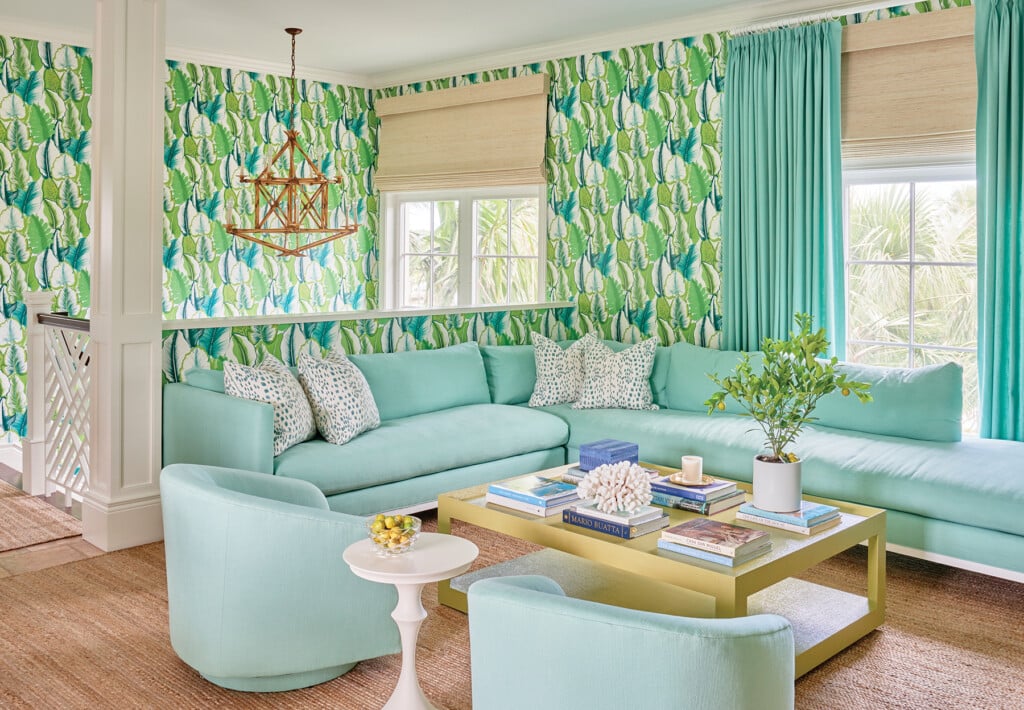
Cool colors are defined as any color containing at least 50 percent blue and include variations on blue, green, and purple. These “quiet colors” trigger a calming parasympathetic response from your nervous system, where the release of neurotransmitters leads to reduced stress and decreased blood pressure and heart rate. Lowered body temperature and slowed physical arousal results in psychological feelings of serenity and relaxation. Cool colors are stress reducers that generate serenity and balance and encourage focus. Incorporate them into calm spaces, like bedrooms and laid-back living areas, where tranquility is the goal.

Photo courtesy of Cece Bowman Interiors Styling by Frances Bailey
Tool 2: Light
“Natural light is the ultimate
luxury. It’s something you can’t replicate with artificial sources.”
—Mariette Himes Gomez
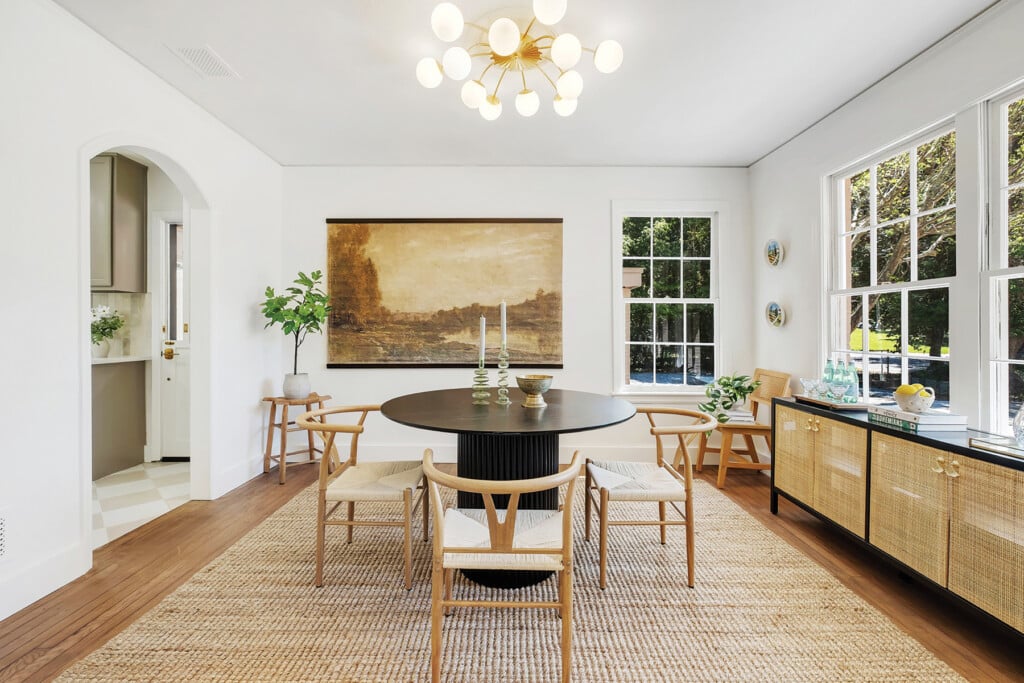
Exposure to natural light drives the production of serotonin—the happiness hormone—helping to reduce stress and boost overall emotional well-being. Bright, naturally lit spaces foster enhanced cognitive functioning, improved alertness, and productivity. And leveraging the power of biophilia by bringing daylight into interiors establishes a very real connection to nature and its restorative effects, while simultaneously lessening feelings of confinement. Natural light can even help with sleep patterns and regulate circadian rhythm. To boost the natural light in your interiors, try forgoing window treatments or use sheer curtains instead. Strategically positioned mirrors can also redirect sunlight deeper into rooms, while glossy, metallic, or glass furniture can bounce light around.

Tool 3: Texture
“Texture is like the icing on the cake in interior design. It’s what makes a room feel inviting and complete.”
—Candice Olson
Textures can directly influence mood and behavior by working on both tactile and visual levels. Tactile texture is what you experience when touching the texture. However, you can also take in a space by sight and infer its tactile implications. For example, a plush rug can feel warm even if you aren’t standing on it.
Soft and plush textures, such as velvet, chenille, wool, and cashmere, can reduce stress by mimicking comforting tactile sensations of safety. They promote pleasant feelings of calm, comfort, and safety, making them an ideal pick for upholstery and accessories in restful bedrooms, cozy living rooms, and reading nooks. They can also be used to balance the mood in rooms that contain cold, hard materials that can incite stress.
Rough and natural textiles, like wood, stone, and brick, can feel grounding thanks to their association with nature, helping to alleviate anxiety, reduce fatigue, and lower blood pressure. This makes them good choices for living areas that you want to feel lived-in and safe or establishing a spa-like feeling in a bathroom. Natural stone, specifically, evokes security and permanence, making it a soothing option in high-traffic areas.