Finishing Touch
Whether historic or modern, wallpaper can make or break a space
In the Western world, the earliest iterations of wallpaper date back to sixteenth-century England and France. At the time, it was considered an affordable alternative to tapestries and other expensive wall hangings. The medium reached a peak in the eighteenth and nineteenth centuries, coinciding with a focus on design and aesthetics. Today, wallpaper is an integral component of any thoughtfully composed space.
For bespoke and boutique producers, methods have barely changed over the last 300 years, and hand-blocked paper remains the gold standard. This technique involves carving a design into wooden blocks—one for each col- or—and hand-pressing each block onto paper, sometimes repeating a single design or layering colors to create an image. It’s a process that often requires hundreds of blocks and weeks of labor.
In terms of historic examples, antique French papers from manufacturers like Zuber & Cie and Dufour are among the most valuable. Founded in 1797, Zuber still uses its original wood blocks (classified as French National Treasures) to create panoramic scenes. Incredibly popular in grand American homes, these “scenic” wallpapers often depicted lush capriccio landscapes, pastoral scenes, or battles. They can be highly sought-after at auction, provided the scenes are complete, well-preserved, and with their original linen backing. You will often find individual wallpaper panels repurposed into decorative screens; these still retain value.
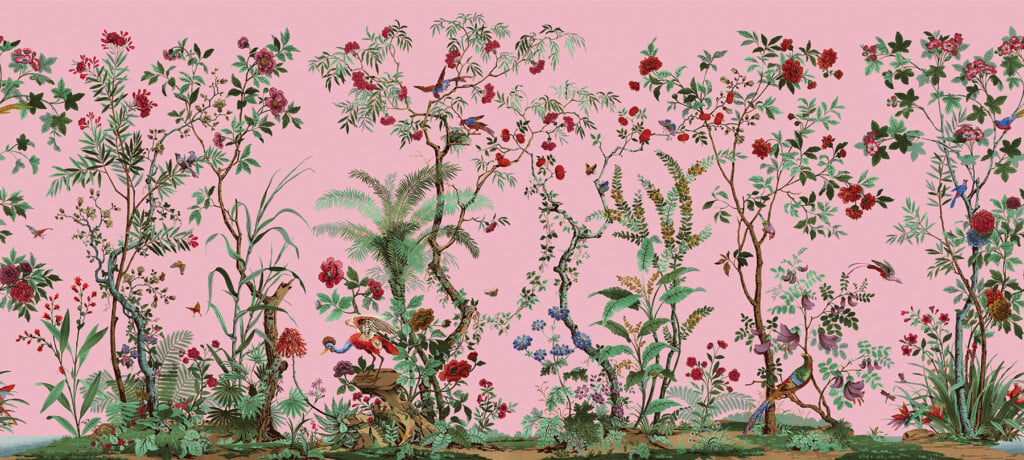
An aesthetic with staying power is chinoiserie. Historically, these were produced in China for the European market, featuring delicate flora, exotic birds, and sweeping garden scenes on silk or fine paper. Today, firms like Florida’s own Aqualille and the London firm of de Gournay carry on this tradition, creating bespoke, handpainted panels that are essentially commissioned works of fine art.
For those looking to view historic examples, the Cooper Hewitt, Smithsonian Design Museum in New York holds one of the world’s most significant wallpaper archives. There are also superb coffee-table books on the subject, including Zuber: Two Centuries of Panoramic Wallpaper (Simon & Schuster, $75).
Wallpaper is the “icing” of interior design, but it can be a fickle medium. For a room to feel cohesive, every pattern return must align perfectly to complete the visual narrative. This need for precision makes acquiring paper on the secondary market a gamble. Sourcing from the primary market, via a manufacturer or designer, is the surest way to guarantee a flawless result.