The ‘Kidult’ Market
Returning to analog may save minds
As the Digital Age makes way for the Intelligence Age and the rise of the metaverse, there are concerns over the amount of time the growing mind is spending soaking up blue lights, altering dopamine thresholds from rewiring the brain by constant stimulation. According to research by the University of Michigan Institute for Social Research, children between the ages 6 and 17 spend only four to seven minutes in unstructured outdoor play, favoring screens over the great outdoors.
Human minds evolved for a world of scarcity, endured periods of low information density, intermittent rewards, and long periods of boredom and mind-wandering. Flipping the switch to constant stimulation has reduced sustained attention capacity, increased the “need” to switch between multiple tasks, and reduced the ability for deep focus.
According to studies by the American Psychological Association and the National Institutes of Health ABCD Study, constant interruptions, such as watching short videos back-to-back, all on different unrelated topics, lead to reduced memory efficiency. Over time, this causes shallower processing capability and greater reliance on heuristics over deliberation. Additionally, without the mind-wandering, aka boredom, the mind becomes stifled and less capable of creative thought.
For most people, the reward system in the brain has been reconditioned to an increased baseline or threshold to feel stimulated. Social media and the rapid influx of random information trigger anticipation loops by providing variable reward schedules (not unlike slot machines in casinos).
Such addictions cause low-stimulation tasks, such as reading a book, solving difficult problems, and the deep thinking necessary for personal growth and self-actualization dull and less urgent or important than getting the next hit from another pointless video.
Research by Adrian F. Ward et al. in the Journal of the Association for Consumer Research has shown that the mere presence of a smartphone, visible during conversations or on a desk while working, can reduce available cognitive capacity.
However, there is a small but growing trend among the Gen Z population, who hear this research and are willing to put down the devices that keep them plugged in to the digiverse.
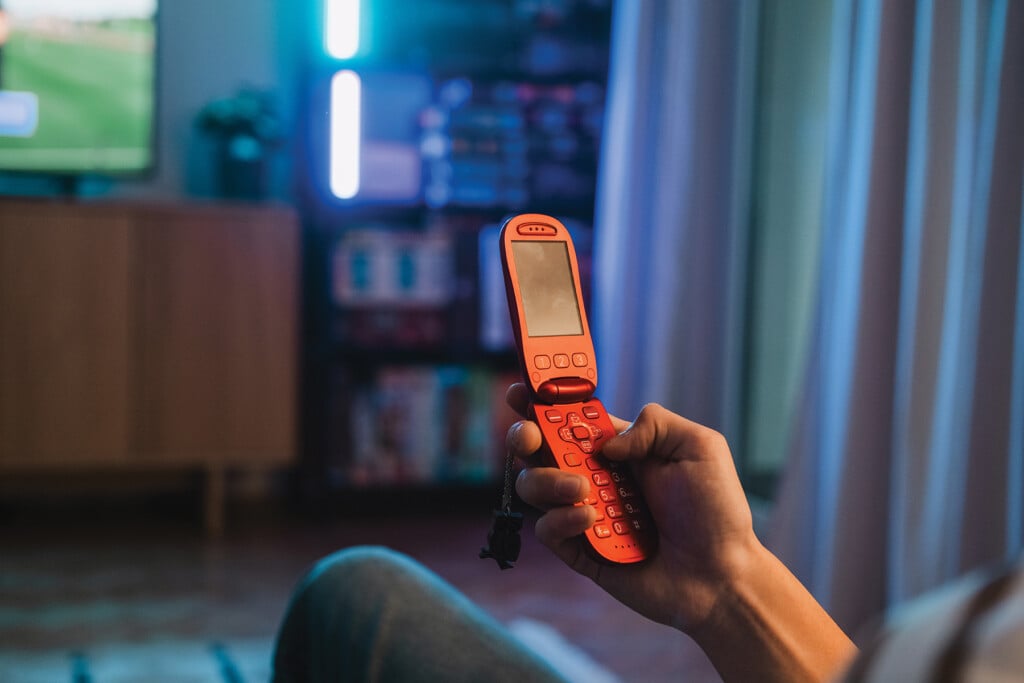
According to reporting by The Washington Times citing industry sales data, purchases of basic “brick phones” among Americans ages 18 to 24 increased 148% between 2021 and 2024. Though admittedly, dumb phones still only account for roughly 2% to 3% of the market share, the trend is attributed to screen contentiousness. As they are now becoming adults, this digital detox movement is growing in popularity, creating a spike in interest for a return to analog.
Several industries on the verge of collapse are seeing a resurgence. In the late 1980s, like a poorly placed needle on vinyl, record sales came to a screeching halt. The industry had almost completely collapsed, as the digital space dominated the market with cassettes and CDs. Rather than seeing records in stores, vinyl enthusiasts were forced to search flea markets and garage sales for their favorite hits. Now, despite available streaming services, Stellar Market Research reported global market valuation is ~$2.1 billion to $2.4 billion in 2024-2025.
At the same time, in the late ’80s and early ’90s, video games and electronic toys exploded into the market, decimating traditional toys. Larger companies, such as Mattel and Hasbro, sifted through the rubble, scooping up any survivors to add to their collection.
However, recent trends are showing a return to analog with an uptick in tabletop gaming, trading cards, and vintage toys. In Q1 alone of 2025, the “Kidult” market saw $1.8 billion in toy sales, with adults 18-plus being the highest spenders, according to Circana.
Though humanity is not likely to ditch the digiverse in favor of holistic pastimes, like reading, writing, and arithmetic for fun, the elite few have recognized the benefits of favoring a life of lower stimulation.