Fabulous Fifth Walls
Three reasons why the fifth wall—aka the ceiling— shouldn’t be ignored
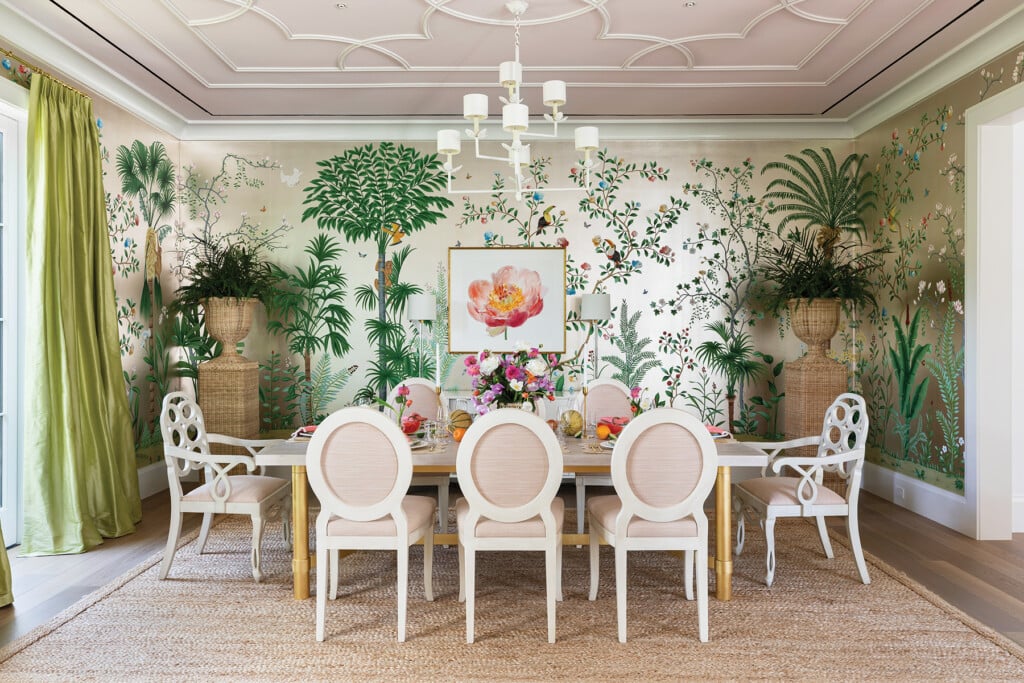
1 It can speak to your atmosphere and help set your desired tone.
One of the goals of interior design is to create a cohesive mood, and your ceiling can be a compelling component in that mission. Painting it a darker color with a warm, saturated hue creates intimacy and a cocoon-like effect in a space that may have felt too sterile or cavernous before. This is a good option for a dining room or tranquil bedroom. Dark hues can also establish a moody and elevated aesthetic.
Made from beams and panels arranged in a grid, coffered ceilings have historically been a trademark of traditional homes, but they can be incorporated into any space where you would like to add sophistication and elegance. Larger bedrooms, living rooms, foyers, and home libraries are strong candidates for this ceiling treatment.
Gold-, silver-, or copper-painted, -plastered or -wallpapered ceilings can bring a touch of Hollywood glam and chicness. Elevate the look by keeping the room’s other walls and furniture simple and largely in white.

Photos by CARMEL BRANTLEY / CECE BOWMAN INTERIORS
2 It can change the perception of space and height.
Ceiling treatments can be used to trick our brain’s perception of visual space. Consider these strategies:
Using a lighter color on the ceiling than on the walls reflects the most light, causing the room to feel more open and airier. A paint with a high-gloss finish also reflects light and can have the same ceiling-heightening effect.
In contrast, using a darker tone on the ceiling draws it down visually and makes the space feel cozier.
By painting the ceiling the same color as the primary walls, often referred to as “color drenching,” you can make the room feel immersive and more spacious, as it eliminates color contrasts that distract the eye. In smaller spaces, this enveloping effect with moody hues can up the intimacy quotient.

Photos by CARMEL BRANTLEY / CECE BOWMAN INTERIORS
3 It can create drama and personality.
While drama can be a way to turn up the volume in a space, too much drama has the potential to create discordant design. By saving the drama for the ceiling—rather than the primary walls—it becomes an unexpected focal point that doesn’t overtake the visual field.
Strong colors like charcoal, black, or navy can lend a dramatic modern effect, particularly in tall rooms that have a lot of light. Utilizing texture and decorative details like wallpaper, tiles, or wood panels can also add a pop of drama, as these elements provide visual impact without being overwhelming. Or, for maximum design oomph, you can go all in with a dynamic combination of painted coffers and wallpaper