Modernizing the Mid-century
Two timeless kitchens get a refresh
The end of World War II spurred an era of optimism. Economies thrived again, technology advanced, and the population boomed.
At the same time, new materials were becoming available that inspired architects to marry functionality with modern style. In Tallahassee, then up-and-coming neighborhoods like Betton Hills, Waverly Hills, Midtown, Myers Park, and Los Robles became the image of mid-century modern.
However charming mid-century modern styles can be, some elements are best left in the past. Though functional and lasting, Paul McManus of McManus Kitchen and Bath says mid-century layouts don’t always hit the mark for modern life. Plus, renovations to mid-century modern properties often call for updates to plumbing, electrical, windows, and doorways. And outdated elements like flooring, countertops, cabinetry, and fixtures can be refreshed to reflect vintage charm in a modern light.
Here, we’ll explore two mid-century modern kitchens that have been rebooted for the twenty-first century.

Photo by Carolyn Allen Photography
CONTEMPORARY CHARM
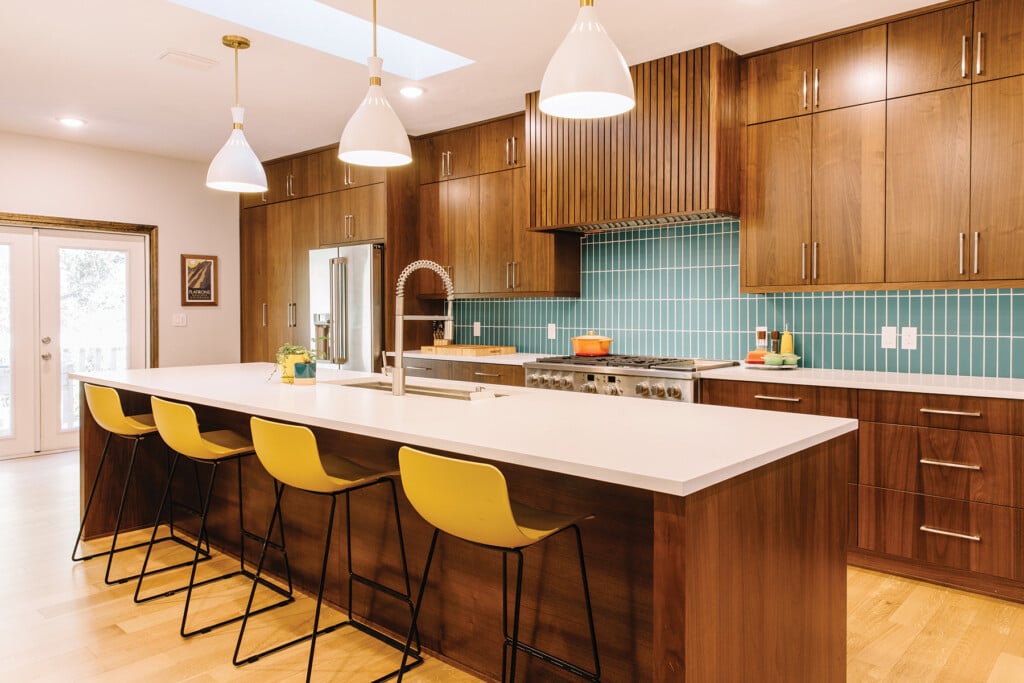
At this Maclay Gardens area home, designer Brianna Browning worked with the McManus team to give a fresh look to this mid-century galley kitchen.
New white oak hardwood floors replaced a washed-out cream tile, and sleek walnut cabinets got a bourbon stain to contrast the flooring (while complementing the woodgrain directionally). The range space was expanded to fit a the new 48-inch appliance, and the overhead hood flows seamlessly with the cabinetry in a walnut slat covering. McManus says decorative wood hoods have been popular in recent years and make a great focal point in kitchens with ranges 42 inches or larger, which often require a custom hood.
“In this kitchen, we chose a walnut slat wood that was in keeping with the mid-century modern style. But when it comes to custom wood hoods, almost anything is possible,” says Paul McManus, president of McManus Kitchen and Bath. “We’ve done hoods with tile finishes, marble, even plaster.”
The teal backsplash leans into the mid-century theme, which McManus notes often featuers geometric shapes and jewel tones. The extended length subway tile style gives way to a more contemporary look.

Photo by Carolyn Allen Photography
The center island was expanded to better suit the layout and the family’s workspace needs. A quartz countertop, Silestone’s Eternal Statuario, was chosen for its durability, ease of maintenance, and neutral tone.
A catch-all appliance area became a curated beverage and espresso bar with walnut shelving and cabinetry, the same teal backsplash, and a built-in beverage fridge. The espresso station is tucked away in a tall, sleek cabinet space.
An already spacious kitchen, storage was not an issue. But in-cabinet features were added for efficiency and convenience.
Project Takeaways
Final cost: $168,485
Renovation time: Three months
Key improvements: White oak flooring, expanded island, larger range, espresso bar
Maintaining mid-century charm: The dark walnut cabinetry is sleek and simple; the rectangular teal backsplash and barstools bring in a bright yet vintage-inspired color
scheme and shape.

Photo by Carolyn Allen Photography
SIMPLE AND SLEEK
The Waverly Hills home required a little more restructuring to bring mid-century into the future.
“This house still had the original kitchen from the late ’60s,” McManus says. “It was small, lacked proper ventilation, and though the layout was efficient, it felt cramped with hanging peninsula cabinets and a wall oven. The location of the carport window and door created a lot of wasted space.”
Plans from designer Kristi Williams and the McManus team sacrificed an unused window and transplanted a door to add a buffet and bar area that enhanced storage space and allowed for an expanded kitchen floor plan. This created a space to relocate the range and fridge. The sink and food prep areas were also moved; however, McManus doesn’t always recommend the island as the best place for sinks or appliances, as it can complicate installation, upkeep, and repairs.
“Remodeling is often about compromise because you have to adapt to the existing space,” McManus says.
McManus says storage was a give-and-take in this project.

Photo by Carolyn Allen Photography
For the pantry, the owners updated to a tankless water heater that was moved outside to create more storage space. A largely unused space at the back of the kitchen became a functional bar and storage area. This space contains a microwave drawer, which McManus says is a newly popular alternative to the countertop microwave as a space saver and convenience for younger family members.
A light blue backsplash tile was selected to complement the cherry cabinetry throughout. And the tile’s stacked pattern design is in line with mid-century themes. The quartz countertop, Caesarstone’s White Attica, was chosen for durability and ease of maintenance.
For mid-century remodels, McManus recommends that renovations work to maintain charm. Restore existing hardwood flooring when possible. Apply a plaster finish to drywall to maintain a historic look. Refurbish vintage light fixtures and hardware that are original to the home or sourced at antique shops. Work with warm woods, neutral paint colors, and bold jewel-tone accents in backsplash and decor.
Project Takeaways
Final cost: $100,780
Renovation time: 2½ months
Key improvements: Unused carport window removed and door transplanted to improve flow. Sink moved to the expanded open peninsula, and range moved to previous sink location. Wood flooring update. Cherry cabinets with slab doors. Bar and buffet area additions.