Clean Green Energy Machine
The city of Tallahassee has committed to using 100 percent clean energy by 2050. Here’s a look at how the municipality is getting there.
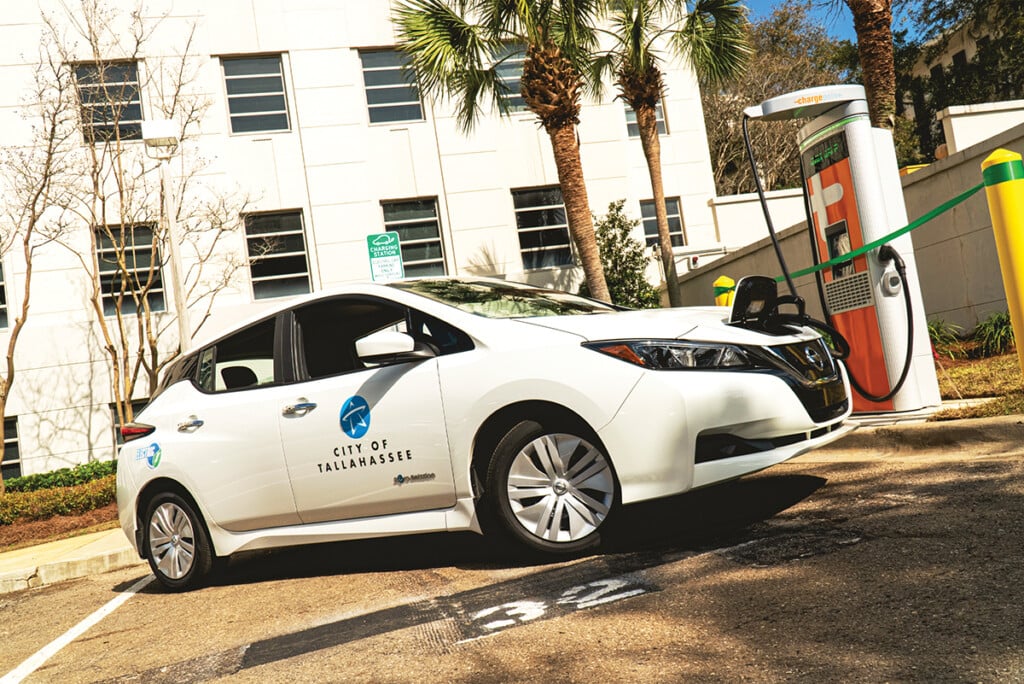
The city of Tallahassee aims to be running on 100 percent clean and renewable energy by 2050, an ambition that is already in motion with increased electric StarMetro buses in the streets, high-efficiency LED lighting in municipal buildings, and other experimental clean technologies geared toward shrinking the metro area’s use of fossil fuels. It is now one of 160 cities in the United States and one of 10 in Florida to commit to this goal, an effort it hopes will lead to cleaner air, healthier residents, more green jobs, and a stronger community overall.
Though Tallahassee formally committed to 100 percent clean energy recently, it has been earning its energy conservation and sustainability bona fides since the 1990s, says Michael Ohlsen, assistant general manager of integrated system planning for the City of Tallahassee Electric and Gas Utility. That’s when the city started using demand-side management programs that incentivized customers to modify their energy consumption. Since 2008, those programs have avoided the generation of almost 500,000 megawatt-hours of electricity and generated more than $150 million in local economic impact.
“[The programs] include home energy audits, incentives for energy efficiency appliances, low-interest financing for upgrades in homes and businesses and such,” Ohlsen says. “Then, around 2017, we brought online our first solar farm and the second one in 2019. Around that time, the community approached the city commission and said, ‘Hey, based on all the work we’ve been doing, let’s go the whole way.’”
 In 2019, the city commission unanimously resolved to transition to 100 percent clean and renewable energy and began working with Tally 100, its city-owned utility service, its citizens advisory committee, and the local Sierra Club chapter to determine a five-to-seven-year plan for getting the city toward its goals.
So far, Ohlsen says all municipal buildings are powered by solar farms located at the airport. One-third of the city vehicles are either electric or emission-free. Forty percent of the city’s StarMetro buses are now electric. Thirty city buildings have been retrofitted with high-efficiency LED lighting. Others have upgraded energy management systems, while others have efficiency upgrades to their HVAC systems.
“City hall features an ice storage system that is part of its HVAC upgrade,” Ohlsen says. “What makes it unique is that when we have affordable and abundant energy overnight, that system is making ice with the lowest cost energy. Then the next day, as it starts heating up outside and the HVAC system kicks in, we’re able to draw the cooling off that ice and keep our energy use low during the hottest and most congested times of our grid. It’s such a neat technology that helps maintain comfort within the building in a cost-effective, efficient manner.”
The senior center also has an ice storage system, and Ohlsen says the city utility will continue to monitor its performance there and in city hall. If it performs well in those locations, the city may develop incentives for commercial customers and other city buildings to use that technology.
“Part of our plan is adopting new or evolving technologies that use energy more wisely,” Ohlsen says. “And that smaller energy footprint means it’s just a smaller target to hit on the supply side.”
In 2019, the city commission unanimously resolved to transition to 100 percent clean and renewable energy and began working with Tally 100, its city-owned utility service, its citizens advisory committee, and the local Sierra Club chapter to determine a five-to-seven-year plan for getting the city toward its goals.
So far, Ohlsen says all municipal buildings are powered by solar farms located at the airport. One-third of the city vehicles are either electric or emission-free. Forty percent of the city’s StarMetro buses are now electric. Thirty city buildings have been retrofitted with high-efficiency LED lighting. Others have upgraded energy management systems, while others have efficiency upgrades to their HVAC systems.
“City hall features an ice storage system that is part of its HVAC upgrade,” Ohlsen says. “What makes it unique is that when we have affordable and abundant energy overnight, that system is making ice with the lowest cost energy. Then the next day, as it starts heating up outside and the HVAC system kicks in, we’re able to draw the cooling off that ice and keep our energy use low during the hottest and most congested times of our grid. It’s such a neat technology that helps maintain comfort within the building in a cost-effective, efficient manner.”
The senior center also has an ice storage system, and Ohlsen says the city utility will continue to monitor its performance there and in city hall. If it performs well in those locations, the city may develop incentives for commercial customers and other city buildings to use that technology.
“Part of our plan is adopting new or evolving technologies that use energy more wisely,” Ohlsen says. “And that smaller energy footprint means it’s just a smaller target to hit on the supply side.”
 Within the community, the city has been offering incentives, rebates, grants, and low-interest loans on Energy Star appliances and other high-efficiency technologies. Ohlsen says smart and connected technologies are among the things the city incentivizes as well because they will allow homeowners and businesses to monitor and manage their energy usage remotely.
Citizens looking to decrease their carbon footprint can begin by calling the city to get an energy audit, Ohlsen says.
“Our energy audit professionals will come to you to take a look at your energy usage and glean insights,” Ohlsen says. “During a walkthrough, [these pros] can outline how they think you might benefit from certain measures.”
After the audit, customers can call the city or visit its website for more information on solar panels, electric vehicles, and energy-efficient upgrades they can make to their home or business.
Innovation is at the core of these changes. Ohlsen says the city is just starting construction on a floating solar platform at one of its wastewater treatment plant holding ponds.
“Floating solar is nothing new within the industry, but I think we’re the first utility to demonstrate floating solar on one of these ponds,” he says, adding that there are environmental benefits to the shade the panels provide.
Within the community, the city has been offering incentives, rebates, grants, and low-interest loans on Energy Star appliances and other high-efficiency technologies. Ohlsen says smart and connected technologies are among the things the city incentivizes as well because they will allow homeowners and businesses to monitor and manage their energy usage remotely.
Citizens looking to decrease their carbon footprint can begin by calling the city to get an energy audit, Ohlsen says.
“Our energy audit professionals will come to you to take a look at your energy usage and glean insights,” Ohlsen says. “During a walkthrough, [these pros] can outline how they think you might benefit from certain measures.”
After the audit, customers can call the city or visit its website for more information on solar panels, electric vehicles, and energy-efficient upgrades they can make to their home or business.
Innovation is at the core of these changes. Ohlsen says the city is just starting construction on a floating solar platform at one of its wastewater treatment plant holding ponds.
“Floating solar is nothing new within the industry, but I think we’re the first utility to demonstrate floating solar on one of these ponds,” he says, adding that there are environmental benefits to the shade the panels provide.
 In addition to the floating solar, Ohlsen says the city is in talks with a local developer of an agrovoltaic farm—a mixed-use farm that grows produce and creates solar energy.
“We’ve consulted with the Department of Energy’s National Renewable Energy Lab for some assistance to help shape our thinking around what the potential is on this property,” Ohlsen says. “But it’s another example of where we’re looking: not just at large solar farms, but also smaller solar projects throughout the community. We potentially could look at solar on a commercial rooftop or parking lot we’ve got the cooperation of community members. So, it’s kind of an all-in approach.”
Ohlsen says the city is introducing electric vehicle fast-charging stations that will be accessible to the community at large. In summer 2025, it broke ground on a charging station on South Adams Street, and others are in the works for 2026.
“These projects take time to develop, to design, to do both thoughtfully and mindfully,” Ohlsen says.
Tallahassee’s focus on involving the community in the planning was a featured highlight in its recent designation as an All-American City, as designated by the National League of Cities.
“We’re one of ten this year, and we’re very proud of it,” Ohlsen says. “The clean energy plan we’ve committed to reflects the will of the community within the framework of what is possible.”
As Tallahassee methodically enacts its vision, it’s clear the city’s future will shine bright—and clean.
In addition to the floating solar, Ohlsen says the city is in talks with a local developer of an agrovoltaic farm—a mixed-use farm that grows produce and creates solar energy.
“We’ve consulted with the Department of Energy’s National Renewable Energy Lab for some assistance to help shape our thinking around what the potential is on this property,” Ohlsen says. “But it’s another example of where we’re looking: not just at large solar farms, but also smaller solar projects throughout the community. We potentially could look at solar on a commercial rooftop or parking lot we’ve got the cooperation of community members. So, it’s kind of an all-in approach.”
Ohlsen says the city is introducing electric vehicle fast-charging stations that will be accessible to the community at large. In summer 2025, it broke ground on a charging station on South Adams Street, and others are in the works for 2026.
“These projects take time to develop, to design, to do both thoughtfully and mindfully,” Ohlsen says.
Tallahassee’s focus on involving the community in the planning was a featured highlight in its recent designation as an All-American City, as designated by the National League of Cities.
“We’re one of ten this year, and we’re very proud of it,” Ohlsen says. “The clean energy plan we’ve committed to reflects the will of the community within the framework of what is possible.”
As Tallahassee methodically enacts its vision, it’s clear the city’s future will shine bright—and clean.
 In 2019, the city commission unanimously resolved to transition to 100 percent clean and renewable energy and began working with Tally 100, its city-owned utility service, its citizens advisory committee, and the local Sierra Club chapter to determine a five-to-seven-year plan for getting the city toward its goals.
So far, Ohlsen says all municipal buildings are powered by solar farms located at the airport. One-third of the city vehicles are either electric or emission-free. Forty percent of the city’s StarMetro buses are now electric. Thirty city buildings have been retrofitted with high-efficiency LED lighting. Others have upgraded energy management systems, while others have efficiency upgrades to their HVAC systems.
“City hall features an ice storage system that is part of its HVAC upgrade,” Ohlsen says. “What makes it unique is that when we have affordable and abundant energy overnight, that system is making ice with the lowest cost energy. Then the next day, as it starts heating up outside and the HVAC system kicks in, we’re able to draw the cooling off that ice and keep our energy use low during the hottest and most congested times of our grid. It’s such a neat technology that helps maintain comfort within the building in a cost-effective, efficient manner.”
The senior center also has an ice storage system, and Ohlsen says the city utility will continue to monitor its performance there and in city hall. If it performs well in those locations, the city may develop incentives for commercial customers and other city buildings to use that technology.
“Part of our plan is adopting new or evolving technologies that use energy more wisely,” Ohlsen says. “And that smaller energy footprint means it’s just a smaller target to hit on the supply side.”
In 2019, the city commission unanimously resolved to transition to 100 percent clean and renewable energy and began working with Tally 100, its city-owned utility service, its citizens advisory committee, and the local Sierra Club chapter to determine a five-to-seven-year plan for getting the city toward its goals.
So far, Ohlsen says all municipal buildings are powered by solar farms located at the airport. One-third of the city vehicles are either electric or emission-free. Forty percent of the city’s StarMetro buses are now electric. Thirty city buildings have been retrofitted with high-efficiency LED lighting. Others have upgraded energy management systems, while others have efficiency upgrades to their HVAC systems.
“City hall features an ice storage system that is part of its HVAC upgrade,” Ohlsen says. “What makes it unique is that when we have affordable and abundant energy overnight, that system is making ice with the lowest cost energy. Then the next day, as it starts heating up outside and the HVAC system kicks in, we’re able to draw the cooling off that ice and keep our energy use low during the hottest and most congested times of our grid. It’s such a neat technology that helps maintain comfort within the building in a cost-effective, efficient manner.”
The senior center also has an ice storage system, and Ohlsen says the city utility will continue to monitor its performance there and in city hall. If it performs well in those locations, the city may develop incentives for commercial customers and other city buildings to use that technology.
“Part of our plan is adopting new or evolving technologies that use energy more wisely,” Ohlsen says. “And that smaller energy footprint means it’s just a smaller target to hit on the supply side.”
 Within the community, the city has been offering incentives, rebates, grants, and low-interest loans on Energy Star appliances and other high-efficiency technologies. Ohlsen says smart and connected technologies are among the things the city incentivizes as well because they will allow homeowners and businesses to monitor and manage their energy usage remotely.
Citizens looking to decrease their carbon footprint can begin by calling the city to get an energy audit, Ohlsen says.
“Our energy audit professionals will come to you to take a look at your energy usage and glean insights,” Ohlsen says. “During a walkthrough, [these pros] can outline how they think you might benefit from certain measures.”
After the audit, customers can call the city or visit its website for more information on solar panels, electric vehicles, and energy-efficient upgrades they can make to their home or business.
Innovation is at the core of these changes. Ohlsen says the city is just starting construction on a floating solar platform at one of its wastewater treatment plant holding ponds.
“Floating solar is nothing new within the industry, but I think we’re the first utility to demonstrate floating solar on one of these ponds,” he says, adding that there are environmental benefits to the shade the panels provide.
Within the community, the city has been offering incentives, rebates, grants, and low-interest loans on Energy Star appliances and other high-efficiency technologies. Ohlsen says smart and connected technologies are among the things the city incentivizes as well because they will allow homeowners and businesses to monitor and manage their energy usage remotely.
Citizens looking to decrease their carbon footprint can begin by calling the city to get an energy audit, Ohlsen says.
“Our energy audit professionals will come to you to take a look at your energy usage and glean insights,” Ohlsen says. “During a walkthrough, [these pros] can outline how they think you might benefit from certain measures.”
After the audit, customers can call the city or visit its website for more information on solar panels, electric vehicles, and energy-efficient upgrades they can make to their home or business.
Innovation is at the core of these changes. Ohlsen says the city is just starting construction on a floating solar platform at one of its wastewater treatment plant holding ponds.
“Floating solar is nothing new within the industry, but I think we’re the first utility to demonstrate floating solar on one of these ponds,” he says, adding that there are environmental benefits to the shade the panels provide.
 In addition to the floating solar, Ohlsen says the city is in talks with a local developer of an agrovoltaic farm—a mixed-use farm that grows produce and creates solar energy.
“We’ve consulted with the Department of Energy’s National Renewable Energy Lab for some assistance to help shape our thinking around what the potential is on this property,” Ohlsen says. “But it’s another example of where we’re looking: not just at large solar farms, but also smaller solar projects throughout the community. We potentially could look at solar on a commercial rooftop or parking lot we’ve got the cooperation of community members. So, it’s kind of an all-in approach.”
Ohlsen says the city is introducing electric vehicle fast-charging stations that will be accessible to the community at large. In summer 2025, it broke ground on a charging station on South Adams Street, and others are in the works for 2026.
“These projects take time to develop, to design, to do both thoughtfully and mindfully,” Ohlsen says.
Tallahassee’s focus on involving the community in the planning was a featured highlight in its recent designation as an All-American City, as designated by the National League of Cities.
“We’re one of ten this year, and we’re very proud of it,” Ohlsen says. “The clean energy plan we’ve committed to reflects the will of the community within the framework of what is possible.”
As Tallahassee methodically enacts its vision, it’s clear the city’s future will shine bright—and clean.
In addition to the floating solar, Ohlsen says the city is in talks with a local developer of an agrovoltaic farm—a mixed-use farm that grows produce and creates solar energy.
“We’ve consulted with the Department of Energy’s National Renewable Energy Lab for some assistance to help shape our thinking around what the potential is on this property,” Ohlsen says. “But it’s another example of where we’re looking: not just at large solar farms, but also smaller solar projects throughout the community. We potentially could look at solar on a commercial rooftop or parking lot we’ve got the cooperation of community members. So, it’s kind of an all-in approach.”
Ohlsen says the city is introducing electric vehicle fast-charging stations that will be accessible to the community at large. In summer 2025, it broke ground on a charging station on South Adams Street, and others are in the works for 2026.
“These projects take time to develop, to design, to do both thoughtfully and mindfully,” Ohlsen says.
Tallahassee’s focus on involving the community in the planning was a featured highlight in its recent designation as an All-American City, as designated by the National League of Cities.
“We’re one of ten this year, and we’re very proud of it,” Ohlsen says. “The clean energy plan we’ve committed to reflects the will of the community within the framework of what is possible.”
As Tallahassee methodically enacts its vision, it’s clear the city’s future will shine bright—and clean.