Precious Heirlooms
Growing Florida’s edible jewels
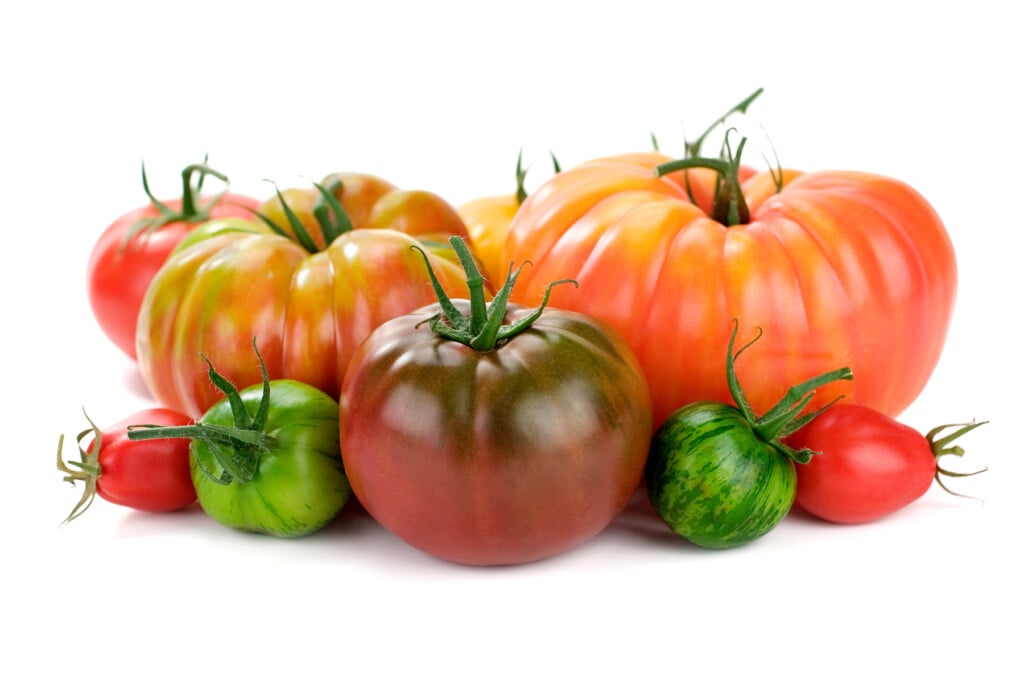
Plump red tomatoes are popular with area gardeners and their friends who get to share the bounty when in season. However, the colors, shapes, and sizes seen in these gardens and supermarket produce sections barely scratch the surface of the fruit’s variations.
Domesticated more than two millennia ago in Central or South America, tomatoes were a key food source for indigenous peoples. The seed arrived in Europe during the mid-sixteenth century, courtesy of Spanish colonization, and slowly spread across the globe.
Farmers in some European countries cultivated tomatoes for food. Horticulturists in Great Britain identified them as a member of the nightshade family: poisonous but an attractive novelty. So, tomatoes were propagated as an ornamental called the “Love Apple,” frequently given as a token of affection.
As tomatoes reached distant and diverse environments, the plants acclimated to the characteristics of their new homes through natural selection. The fruit evolved to reflect the needs and preferences of the societies cultivating it.
Today, open-pollinator heirloom varieties are popular for their unique characteristics and culinary appeal. While most are not economically feasible for commercial farming operations, some can be successfully grown in home gardens.
Check the literature for the USDA Plant Zone where each cultivar can flourish. Talking with other growers to get their experiences may provide insight into the challenges and performance potential.
These antique varieties are cultivated the same way as commonly encountered tomato plants: Usually grown from seed, they should be started with organically rich and well-drained growing media. Starting the plants in peat cups simplifies weed control and progress monitoring. Install sprouts in the garden after frost danger and low temperatures are past. Full sun is required for at least eight hours daily. Be sure to maintain soil moisture, and fertilize based on a soil test.
Insect pests will be no more of a problem for heirloom tomatoes than they will be for modern hybrids. Diseases, especially fungal diseases, are challenging for heirlooms, which have little to no resistance. Check the plants multiple times weekly—daily if possible. If an individual plant shows symptoms of disease, remove it. It is better to lose one plant than the whole crop.
Cherokee Purple is one popular full-size heirloom tomato, and Everglades is a cherry-sized variety. Whether large or small, heirloom tomatoes will bring delicious antique charm to your garden.
What is the USDA Plant Hardiness Zone map?
This nationwide guide divides the United States into zones based on average winter minimum temperatures, helping gardeners choose plants likely to thrive in their region. By matching plants to the appropriate zone, green thumbs can choose species with the best chance of surviving local climate conditions. Tallahassee falls inside the 8B hardiness zone.